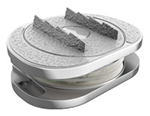
5-Year and 10-Year Evidence Review Cervical Total Disc Replacement
This clinical evidence review synthesizes long-term prospective FDA Investigational Device Exemption (IDE) clinical trials (including Mobi-C, Prestige LP, ProDisc-C, Bryan, and Simplify) and 10-year meta-analyses evaluating the durability, patient-reported outcome measures (PROMs), range of motion preservation, and adverse event profiles of cervical total disc replacement (cTDR / CDA / ADR) at 5-year and 10-year postoperative milestones.
1. Executive Summary & Clinical Rationale
Cervical total disc replacement was engineered as a motion-preserving alternative to anterior cervical discectomy and fusion (ACDF) for patients presenting with single- or two-level cervical radiculopathy or myelopathy due to degenerative disc disease (DDD) unresponsive to conservative treatment. The primary goals of cervical arthroplasty are to relieve neurological compression, preserve physiological kinematics, and reduce adjacent-level biomechanical stress to prevent Adjacent Segment Disease (ASD).
2. 5-Year vs. 10-Year Clinical Metrics Breakdown
The following benchmarks summarize baseline clinical parameters compared with 5-year and 10-year postoperative outcomes across major IDE clinical cohorts:
Neck Disability Index (NDI) Mean Score:
Preoperative Baseline: 52.0 – 64.0 points (Severe functional disability)
5-Year Follow-Up: 14.0 – 19.5 points (Mild disability)
10-Year Follow-Up: 13.5 – 17.5 points (Sustained long-term functional recovery)
NDI Net Improvement:
5-Year Follow-Up: -34.0 to -37.5 points reduction from baseline
10-Year Follow-Up: -35.0 to -38.5 points reduction from baseline
NDI Protocol Success Rate (≥15-Point Reduction):
5-Year Follow-Up: 82.0% – 88.0% of patients achieve protocol-defined clinical success
10-Year Follow-Up: 78.0% – 85.0% maintain clinical success (statistically superior to ACDF cohorts)
Visual Analog Scale (VAS) Neck Pain (0–100 mm):
Preoperative Baseline: 72.0 – 80.0 mm
5-Year Follow-Up: 15.0 – 22.0 mm
10-Year Follow-Up: 13.0 – 20.0 mm (Mean overall reduction: ~55–58 mm)
Visual Analog Scale (VAS) Arm / Radicular Pain (0–100 mm):
Preoperative Baseline: 68.0 – 75.0 mm
5-Year Follow-Up: 12.0 – 19.0 mm
10-Year Follow-Up: 11.0 – 18.0 mm (Mean overall reduction: ~54–57 mm)
Patient Satisfaction Rate:
5-Year Follow-Up: 90.0% – 94.0% very satisfied
10-Year Follow-Up: 88.0% – 93.0% would choose the procedure again
Flexion / Extension Range of Motion (ROM):
Preoperative Baseline: Variable / restricted motion (~5.0° – 6.5°)
5-Year Follow-Up: Maintained physiological mobility (7.0° – 9.5°)
10-Year Follow-Up: Maintained physiological mobility (6.5° – 9.2°)
3. Adjacent Segment Pathology (cTDR vs. ACDF Fusion)
Preservation of segmental kinematics provides substantial long-term biomechanical protection to adjacent levels:
Radiographic Adjacent Segment Degeneration (rASD): Documented in 30% – 38% of cTDR patients at 10 years compared to 65% – 85% of ACDF patients.
Symptomatic Adjacent Segment Disease (sASD) Requiring Surgery:
Single-Level cTDR: 3.5% – 5.5% cumulative reoperation rate at adjacent levels over 10 years.
Two-Level cTDR: 4.3% – 7.0% cumulative adjacent-level reoperation rate over 10 years.
Comparative Relative Risk: Meta-analyses show cTDR provides a 50% to 55% reduction in the odds of adjacent-level reoperation relative to fusion.
4. Comprehensive Complication Profile & Failure Modes
Adverse events and surgical risks associated with cervical arthroplasty are categorized into approach-related, device-related, and reoperation rates:
A. Approach-Related Complications (Anterior Cervical Corridor)
Transient Dysphagia (8.0% – 12.0%): Occurs in the immediate perioperative period; resolves within 6 to 12 weeks with lower long-term incidence than anterior plate-assisted ACDF.
Recurrent Laryngeal Nerve (RLN) Palsy / Dysphonia (1.0% – 2.5%): Typically transient traction neuropraxia that recovers with conservative observation.
Esophageal Perforation / Major Vascular Injury (< 0.5%): Rare major surgical injuries occurring during exposure.
B. Device-Related & Radiographic Phenomena
Heterotopic Ossification (HO): Radiographic HO (Park/McAfee Class I–IV) occurs in 30% – 55% of segments at 10 years. High-grade HO (Class III–IV, resulting in motion restriction or spontaneous fusion) occurs in 18% – 30% of implants. Clinical studies show high-grade HO does not negatively impact NDI or VAS pain scores.
Implant Subsidence (>2 mm) (1.5% – 3.5%): Associated with excessive endplate preparation or osteopenic bone quality.
Device Migration / Dislodgement (< 1.0%): Extremely rare with modern keeled, spiked, or porous-coated titanium/cobalt-chrome endplates.
C. Secondary Surgical Interventions & Reoperations
Index-Level Secondary Surgeries (3.5% – 6.5% 10-Year Cumulative): Includes posterior decompression for recurrent foraminal stenosis, implant revision, or conversion to ACDF.
Total Cumulative Reoperation Rate (Index + Adjacent Levels): 7.5% – 12.0% for cTDR at 10 years, compared to 16.0% – 24.0% for ACDF cohorts.
5. Single-Level vs. Two-Level Clinical Considerations
In FDA IDE 10-year prospective trials (e.g., Mobi-C), two-level cTDR achieved comparable overall clinical success and pain relief to single-level arthroplasty while demonstrating a wider statistical advantage over two-level ACDF, which is historically hindered by higher pseudarthrosis rates and multi-level biomechanical rigidity.
6. Key Clinical Conclusions
1. Enduring Functional Restoration: Cervical disc replacement provides statistically significant and durable reductions in NDI, neck pain, and arm pain through 10 years.
2. Adjacent Level Preservation: Kinematic preservation reduces adjacent-level degenerative strain, cutting secondary adjacent-level surgical interventions by more than half compared to fusion.
3. Safe & Reliable Profile: Low device failure and overall reoperation rates make cTDR a safe, gold-standard alternative to ACDF in properly indicated candidates.