CEO and Medical Director Stenum Hospital
Dr. Karsten Ritter-Lang is widely recognized as one of the world’s foremost pioneers and high-volume specialists in motion-preserving spine surgery, total disc replacement (TDR / ADR), and complex spinal reconstruction. Operating primarily in Germany (notably at specialized orthopedic centers such as STENUM Ortho), he has dedicated decades to advancing non-fusion surgical techniques.
Key Qualifications & Clinical Background
Specialty & Board Certification: Board-certified orthopedic and trauma surgeon in Germany (Facharzt für Orthopädie und Unfallchirurgie), specializing in spinal arthroplasty, motion preservation, and reconstructive spine surgery.
Surgical Experience & Volume: Recognized as one of the highest-volume disc replacement surgeons globally, having performed thousands of cervical and lumbar artificial disc replacements over more than 25 years of specialized practice.
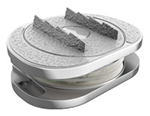
Early Pioneer in Arthroplasty: Actively involved in the early clinical adoption, testing, and refinement of modern motion-preservation technologies, beginning with early-generation implants (such as the Charité and ProDisc) and evolving to contemporary semiconstrained and physiological multi-axis devices (such as ESP and activL).
Motion-Preserving Procedures Performed
Lumbar Total Disc Replacement (L-TDR):
Single-level and multi-level (two-level and contiguous) artificial disc replacements from L3 to S1.
Specialization in the anterior retroperitoneal approach, designed to preserve posterior musculature, facet structures, and spinal ligaments.
Cervical Total Disc Replacement (C-TDR / CDA):
Single-level and multi-level cervical arthroplasty for disc herniations, radiculopathy, and degenerative disc disease.
Motion-preserving decompression utilizing anterior cervical approaches with low tissue disruption.
Hybrid Reconstructions (Motion Preservation + Fusion):
Combination procedures addressing multi-segment disease where one level requires arthroplasty (to maintain mobility) while an unstable or severely degenerated adjacent segment is fused (e.g., ADR at L4–L5 paired with an ALIF at L5–S1).
Revision Spine Surgery & Non-Fusion Salvage:
Complex revision of failed prior spinal procedures, including previous discectomies, laminectomies, or selected fusion conversions to restore physiological balance.
Clinical Philosophy & Technical Focus
Preserving Segmental Biomechanics: Avoiding spinal fusion whenever clinically feasible to mitigate stress transfer to adjacent functional spinal units and prevent Adjacent Segment Disease (ASD).
Direct Anterior Approaches: Utilizing retroperitoneal and anterior cervical corridors to achieve complete disc space clearance and direct neural decompression without violating posterior stabilizing structures or spinal canal musculature.
Strict Diagnostic & Candidacy Protocols: Utilizing dynamic flexion/extension imaging, high-resolution MRI, and bone quality evaluations (DEXA) to confirm facet integrity and ensure optimal implant fixation and longevity.