As an orthopedic spine surgeon, practicing for over 20 years, and doing thousands of spine surgeries I can tell you.
When I say insurance companies are denying patients a superior surgery using reasons the literature already debunked, I’m not guessing. I watch it happen every week.
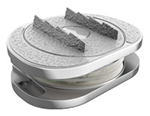
Total disc replacement (TDR) preserves motion instead of eliminating it. That matters, because fusion is what drives adjacent segment disease, the breakdown above and below that sends people back for another surgery. TDR is designed to prevent exactly that.
Here are the three “reasons” US patients get denied. All three are nonsense, and here’s the reasons and the literature that says so:
“You had a previous laminectomy or discectomy.”
The CHARITÉ FDA trial found patients with prior discectomy did at least as well as those with no surgical history.
(Blumenthal et al., CHARITÉ IDE trial, Spine)
“It’s a two-level indication.”
Two-level TDR matches single-level in FDA trial data, and we have done thousands of ProDisc-L surgeries for two levels with great success.
Denying it as “unproven” contradicts the FDA itself.
(Zigler & Ohnmeiss, ProDisc-L IDE trial)
“It’s next to a previous fusion.”
Backwards thinking!
Fusion is what accelerates the adjacent level’s breakdown, so a motion-preserving disc beside it is the rational best choice, reoperation runs ~2–4% after disv replacement vs ~14–19% after spinal fusion. Denying it just sets you up for another fusion.
(Zigler et al., Global Spine J 2018)
None of these denials are about the science or the results. The science is settled. The results are proven.
They are insurance cost containment dressed up as clinical policy, and the patient pays with their spine.
If you’ve been denied for any of these three reasons, the literature and our results are on your side. We are on your side.
Denials get overturned on appeal every day, but only if you and your surgeons are willing to engage in the fight.
CEO and Medical Director at Hospital for Orthopedic Surgery Stenum
If you’re dealing with chronic leg and/or back pain and considering spine surgery, it’s worth asking whether a motion-preserving option is available to you from the start, and if fusion is the recommendation, why that’s the case. If you’ve already had a spine procedure and you’re facing a second surgery, the question becomes whether that next level could be treated in a way that preserves mobility and function.
Patients Seek Artificial Disc Replacement in Germany
International patients frequently travel to specialized spine centers in Germany to access advanced motion-preserving spine surgery alternatives to conventional spinal fusion.
Key clinical differentiators include:
- Multi-Level Approaches: Routine performance of multi-level lumbar (L4-L5, L5-S1) and cervical disc arthroplasty.
- Prosthetic Technology: Access to next-generation viscoelastic and unconstrained disc prosthetics (e.g., M6-L, M6-C, ProDisc-L, LP-ESP, activL).
- Anterior Retroperitoneal Exposure: Muscle-sparing anterior lumbar approaches designed to preserve posterior musculature and reduce adjacent segment disease (ASD).
About Dr. Karsten Ritter-Lang: Motion Preservation & Spine Arthroplasty
Dr. Karsten Ritter-Lang is recognized internationally for his clinical focus on intervertebral disc prosthetics and complex spinal reconstruction.
- Surgical Experience: Over 30 years dedicated to motion-preserving spinal procedures, having performed thousands of cervical and lumbar artificial disc replacements.
- Academic Lineage: Trained directly under Prof. Dr. Kurt Schellnack and Dr. Karin Büttner-Janz at the Charité University Hospital in Berlin—the pioneering research team that developed the original Charité artificial disc prosthesis.
- Clinical Focus: Multi-level lumbar disc replacement, motion-preserving reconstruction for degenerative disc disease, and alternatives to spinal fusion.
Remote Consultations & International MRI Reviews
For patients seeking preliminary assessments or second opinions regarding total disc replacement and spinal stenosis treatments:
- Better Disc Replacement: Detailed comparative guides on motion preservation vs. spinal fusion, clinical indications for lumbar total disc replacement (TDR), and multi-level case analyses.
BetterDiscReplacement