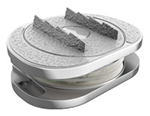
Because of a suboptimal surgical approach selection, flawed mechanical execution, and the systemic bias that favors spinal fusion over motion-preserving technologies like Artificial Disc Replacement, Luigi Mangione was subjected to years of pain.
Surgical Technique Failures and the Bias Against Motion Preservation
The case of Luigi Mangione has ignited widespread clinical and public debate over how severe lumbar pathology is treated in young, active patients. Beyond the forensic and legal headlines, the X-rays and surgical history that emerged highlighted longstanding controversies in modern spine care: suboptimal surgical approach selection, flawed mechanical execution, and the systemic bias that favors spinal fusion over motion-preserving technologies like Artificial Disc Replacement (ADR).
Deconstructing the Surgical Execution: What Went Wrong?
When independent neurosurgeons reviewed the post-operative imaging shared publicly, several critical deficiencies in the surgical strategy and execution became evident:
Inadequate Anatomical Reduction
Mangione suffered from a high-grade lumbar slip—suspected isthmic or traumatic spondylolisthesis at L5–S1.
The Error: The surgery was performed using an all-posterior approach (PLIF/TLIF).
The Consequence: Posterior-only access limits the size of the interbody cage a surgeon can insert without over-retracting nerve roots. Consequently, the surgeon failed to pull the slipped vertebra back into anatomical alignment (reduction) and failed to restore the natural lordotic curve of the lower spine. The persistent pelvic mismatch and hyperlordosis above the segment leave the biomechanical chain under severe strain.
Hardware Positioning Flaws
Screw Placement: Expert spine surgeons noted that the S1 pedicle screws appeared excessively long. Overtly prominent or poorly angled screws risk bicortical over-penetration, endangering anterior neurovascular structures or irritating the adjacent lumbosacral plexus.
Persistent Foraminal Stenosis: Because height wasn’t fully restored anteriorly, the neural foramina (the exit canals for the L5/S1 nerve roots) remained narrowed, explaining persistent radiating radiculopathy and neuropathic pain.
Why Do Surgeons Default to Fusion Over Disc Replacement?
For young athletes, fusing a mobile lumbar segment sets off a biomechanical cascade known as Adjacent Segment Disease (ASD). When L5–S1 is welded solid, the rotational and shear forces transfer immediately to L4–L5, accelerating disc breakdown and often demanding subsequent surgeries.
Despite the availability of Total Disc Replacement (TDR / ADR) and dynamic stabilization devices, surgeons frequently reject motion preservation in favor of fusion. The drivers behind this systemic preference are structural:
Could Disc Replacement Have Been the Better Choice?
To determine whether ADR would have been the superior path, the underlying mechanism of the injury is paramount:
The Ideal Scenario for ADR / Motion Preservation
If the primary pathology began as severe degenerative disc disease (DDD) or disc collapse without severe facet incompetence, an Artificial Disc Replacement would have preserved natural segmental motion, maintained normal pelvic incidence-lumbar lordosis harmony, and avoided transferring catastrophic shear stress to the upper lumbar levels.
The Clinical Limitation: Isthmic Spondylolisthesis
In cases involving true bilateral pars fractures (isthmic spondylolisthesis) with mechanical translational instability, standard ADR may be traditionally contraindicated because an artificial disc requires intact posterior elements and competent facet joints to control shear. However:
1. Dynamic Motion Systems: Emerging posterior motion-preserving systems (such as the FDA-approved ProDisc disc replacement) are designed specifically to stabilize grade-1 spondylolisthesis without fusing the vertebrae.
2. True 360° Restoration: Even if fusion was strictly necessary due to structural instability, opting for a minimally invasive ALIF (Anterior Lumbar Interbody Fusion) with percutaneous posterior fixation would have fully restored disc height and lordosis—a standard of care that was bypassed in favor of an outdated, incomplete posterior-only approach.
Approach Over Hardware: The failure in Mangione’s lumbar surgery was not merely hardware placement; it was the selection of a single posterior approach that could not anatomically correct a high-grade mechanical deformity in a young patient.
The Motion-Preservation Gap: The U.S. spine care paradigm remains heavily weighted toward fusion due to insurance reimbursement pathways and conservative surgical habits, leaving younger, active patients vulnerable to lifelong biomechanical deficits and adjacent segment degeneration.
The Human Cost: When spine surgery fails to restore correct sagittal alignment or causes hardware-related nerve impingement, the resulting chronic neuropathic pain is among the most debilitating conditions in clinical medicine.
Is Disc replacement the answer?
According to top spine surgeon Dr. Karsten Ritter-Lang, If you are suffering from chronic back or neck pain caused by damaged spinal discs it is likely that spinal fusion can be avoided.
Where can I get more information about Disc Replacement Surgery?
For Dedicated Patient Portals & Remote MRI Reviews go to betterdiscreplacement.com
Where can I get more information about the top disc replacement surgeon Dr. Ritter-Lang?
Because a significant portion of Dr. Ritter-Lang’s patient base travels internationally for total disc replacement (TDR), his team maintains dedicated international educational and consultation portals:
Better Disc Replacement: betterdiscreplacement.com
Features: Detailed background on multi-level cervical and lumbar disc replacement techniques, patient case studies, and comprehensive guides comparing motion preservation against fusion.
Professional Background & Credentials
Clinical Focus: Over 30 years specializing in intervertebral disc prosthetics, complex multi-level reconstructions, and anterior/abdominal approaches to the spine.
Surgical Experience: Has completed thousands of motion-preserving spine procedures utilizing advanced implants such as M6-C, M6-L, ProDisc, and Mobi-C.
Early Foundations: Trained under Prof. Kurt Schellnack and Dr. Karin Büttner-Janz at Charité University Hospital in Berlin—the research team credited with developing the original Charité artificial disc.
People go to Germany for back surgery primarily to access advanced motion-preserving procedures, artificial disc replacements, and dynamic stabilization systems that may be newer, less restrictive, or harder to find in North America.
Where can I learn about the best alternatives to spinal fusion and disc replacement surgery?
The surgeons at
BetterDiscReplacement.com have the experience and the skills required for complex multi-level lumbar and cervical disc replacement surgeries and other advanced spine solutions.
“Advanced disc replacement implants have allowed us to achieve a success rate of 99%”